How to Check Where You Actually Rank on Google Maps (Not Just When You Search Your Own Name)
Most Houston home service business owners check their Google ranking the same way: they open Google Maps, type in their business name, and see themselves pop up. That feels reassuring. But it tells you almost nothing about whether customers can actually find you.
When a homeowner in Katy searches "AC repair near me," they don't type your company name. They type the service they need. And what Google shows them depends on where they're physically standing when they search.
Why Searching Your Own Name Is Misleading
Google always shows your business when you search your exact name. That's by design. But that's not how customers find you. They search for services: "plumber near me," "roof repair Houston," "pest control Cypress."
When they do, Google uses three factors to decide who shows up in the top 3 map results:
- Proximity: How close is the searcher to your business address?
- Relevance: How well does your profile match what they searched?
- Prominence: How strong is your review profile, website, and online presence?
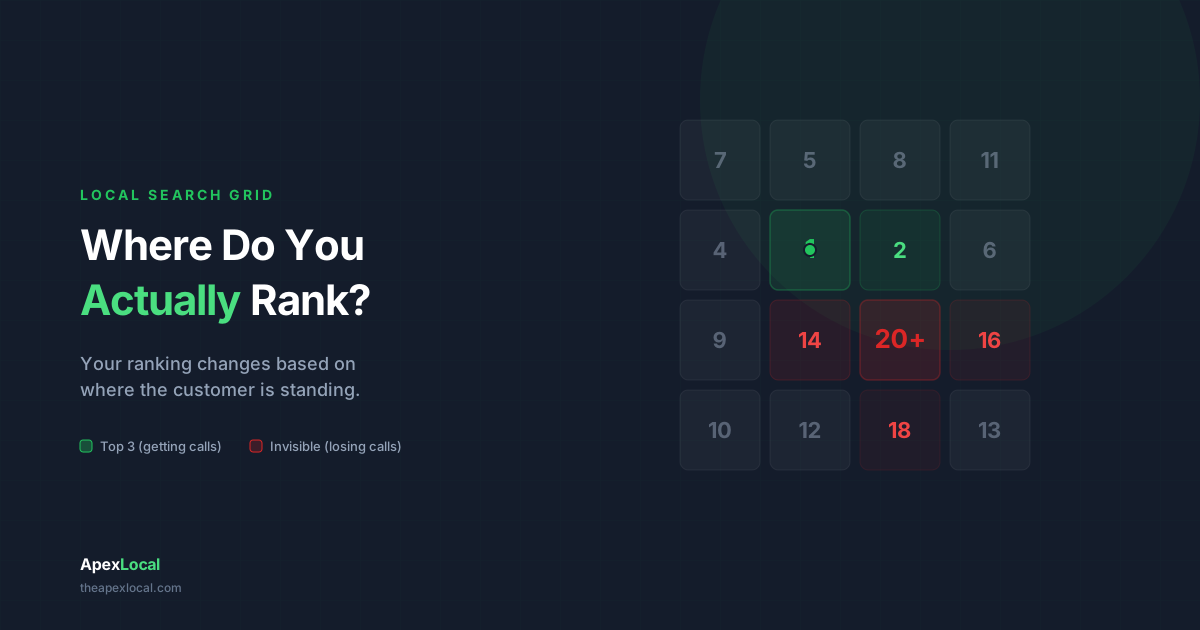
Your ranking shifts block by block across your service area. You might be #1 in one zip code and completely invisible three miles away. Searching your own name from your office hides all of that.
How Does a Local Search Grid Work?
A Local Search Grid maps your ranking across dozens of geographic points in your service area. Instead of checking one location, it checks 91 or more. Each point on the grid shows your exact position for a specific keyword at that location.
The result is a color-coded map. Green cells mean you're in the top 3 (where 93% of calls go, according to BrightLocal). Red cells mean you're ranked so low that customers at that location will never see you.
For example, a Houston HVAC company might rank #1 near their office in Cypress but drop to #15 in Katy and completely disappear in Sugar Land. Without a grid, they'd never know.
What Should Houston Businesses Look for in Their Grid?
When you get a Local Search Grid report, pay attention to these things:
- Geographic coverage: Are you visible across your full service area, or only near your business address?
- Directional weakness: Some businesses rank well to the north but are invisible to the south. This is common in Houston because the metro area is so spread out.
- Competitor positioning: The grid also shows who ranks above you at each point. You might discover the same competitor dominates every cell where you're weak.
- Keyword variation: Your ranking for "AC repair" might be different from "HVAC company" or "air conditioning service." Each keyword tells a different story.
Can You Check This Yourself?
You can do a rough version manually. Drive to different parts of your service area, search your main keyword on your phone, and note where you show up. But this is slow, inconsistent, and doesn't give you a full picture.
Professional Local Search Grid tools check 91+ points simultaneously, track competitors at every location, and generate a visual map you can actually use to make decisions. We use these tools when we run free audits for Houston-area businesses because manual spot-checking misses too much.
What Makes Your Grid Ranking Drop?
Several factors cause your ranking to weaken as customers search further from your address:
- Low review count: Businesses with more reviews tend to hold their ranking over a wider radius
- Stale reviews: If your most recent review is months old, Google treats your profile as less active
- Incomplete Google Business Profile: Missing categories, hours, photos, or service descriptions hurt relevance
- No review responses: Google tracks whether you engage with reviewers. Silence signals neglect.
- Weak NAP consistency: If your business name, address, and phone number don't match across directories, Google trusts you less
Key Takeaway
Searching your own business name on Google Maps is not a ranking check. Your real ranking changes based on where the customer is standing, what they search, and how your profile compares to every competitor nearby. The only way to know where you actually stand across your Houston service area is to run a Local Search Grid that checks every point on the map. Most businesses that do this for the first time are surprised by how much territory they're losing.
Want to see where your business actually stands? We'll run two free reports showing your exact ranking position, competitor threats, and visibility gaps across your service area. Request your free audit →
See where your business stands
Get a free Local Audit Report and Search Grid showing exactly where you rank against competitors across your service area.
Get My Free Audit →Free. No obligation. Delivered within 24 hours.