4 min read
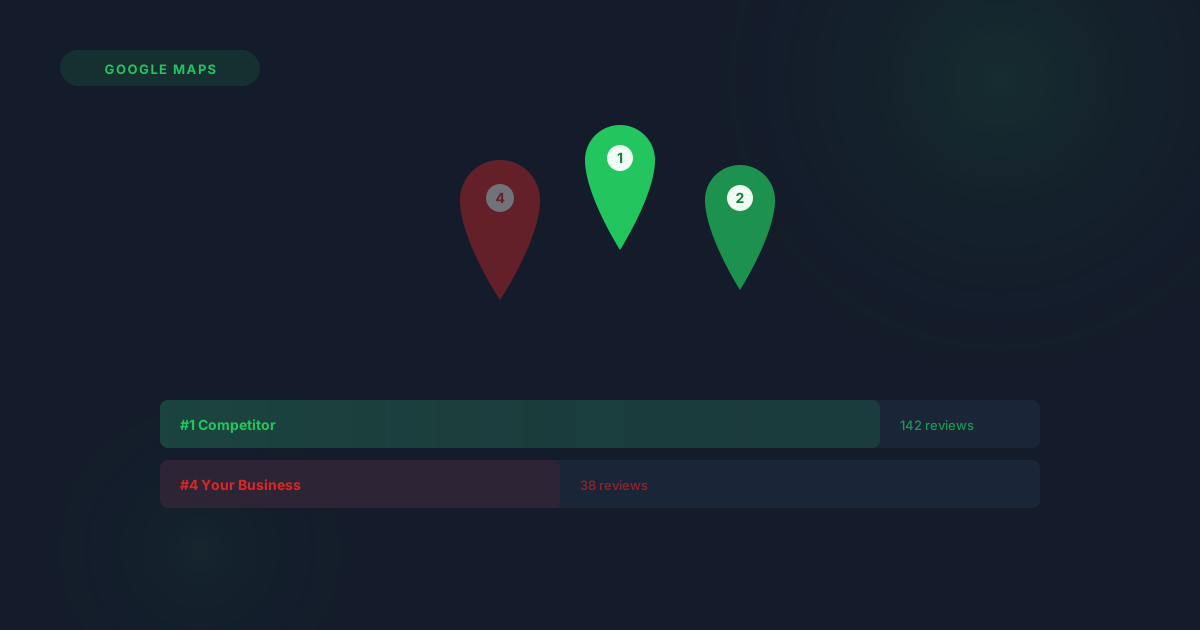
You search your own service area on Google Maps and there they are — a competitor sitting above you in the results. Maybe they're newer than you, maybe you know their work isn't better than yours. But there they are, getting the calls.
It's not random. Google Maps rankings follow a pattern, and once you know what drives them, the gap stops feeling mysterious. Here are the five most common reasons a competitor outranks you on Google Maps in Houston, and what's actually going on under the hood.
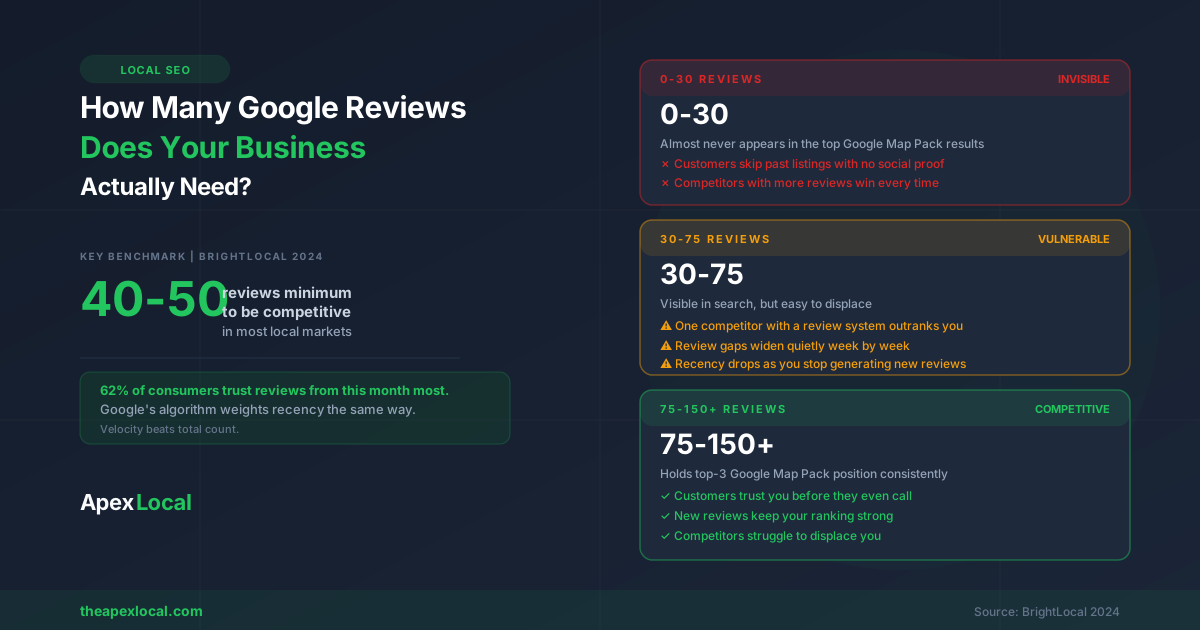
This is the most common gap we see when we run audits for Houston home service businesses. The top-ranked company in a map search often doesn't have the best rating. They have the most reviews, with the most recent activity.
Google's local ranking algorithm weights two review signals heavily: total review count and review velocity (how frequently new reviews are coming in). A competitor with 120 reviews and a new one every week will consistently outrank a business with 40 reviews and nothing in the last two months — even if your rating is slightly higher.
According to BrightLocal's 2024 Local Consumer Review Survey, 67% of consumers only trust reviews written in the last 90 days. Recency isn't just an algorithmic factor. It's a trust signal to the customer too.
If you look at your competitor's profile and see steady, recent activity, they have a system. It's not luck.
Google rewards completeness. A fully built-out Google Business Profile tells Google exactly what you do, where you do it, and who you serve — which makes it easier to rank you accurately.
Most Houston plumbers, HVAC companies, and roofers have the basics — name, phone, hours. But the businesses in the top 3 map results typically have every field filled in and updated photos from actual job sites. Google's algorithm reads all of it.
Google Maps rankings aren't purely about reviews and profile completeness. Behavioral signals matter. If your competitor's listing gets more clicks, more driving direction requests, and more website visits from Maps, Google reads that as a signal that users prefer that result.
This creates a compounding effect. Higher ranking leads to more clicks, which reinforces the ranking. Once a competitor has this momentum, they're hard to displace without a deliberate effort to improve every other factor.
The practical takeaway: every review you get, every photo you add, every keyword-relevant service you list helps your click-through rate. Your listing needs to look trustworthy and complete enough that when it does appear, people choose it.
NAP stands for Name, Address, Phone. It sounds basic, but inconsistencies in how your business name, address, or phone number appear across the internet — Yelp, Facebook, HomeAdvisor, Angi, BBB, local directories — create a trust problem for Google.
If your Google Business Profile says "Houston Comfort HVAC" but Yelp says "Houston Comfort Heating and Air" and your Facebook page says "Houston Comfort" with an old phone number, Google has less confidence that these are all the same business. That uncertainty hurts your local authority score.
The businesses ranking at the top of Google Maps in Katy, Cypress, The Woodlands, and Pearland tend to have clean, consistent NAP data across 30–50 directories. Most business owners have never audited this. It's the kind of thing that quietly holds you back.
Domain age and the age of your Google Business Profile do factor into rankings. A competitor who's been actively managing their online presence for 3 years has more accumulated signals than a business that just started taking this seriously.
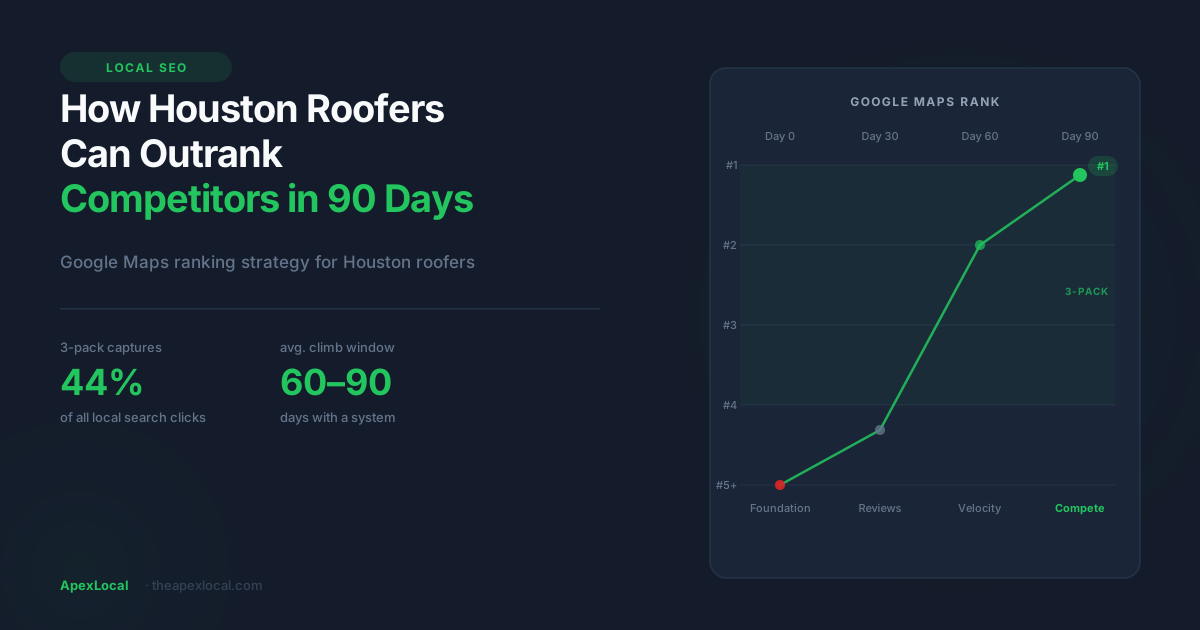
But this isn't a death sentence. We see businesses close significant ranking gaps in 60–90 days when they address the other four factors consistently. Review velocity, profile completeness, NAP consistency, and click-through optimization are all things you can act on now.
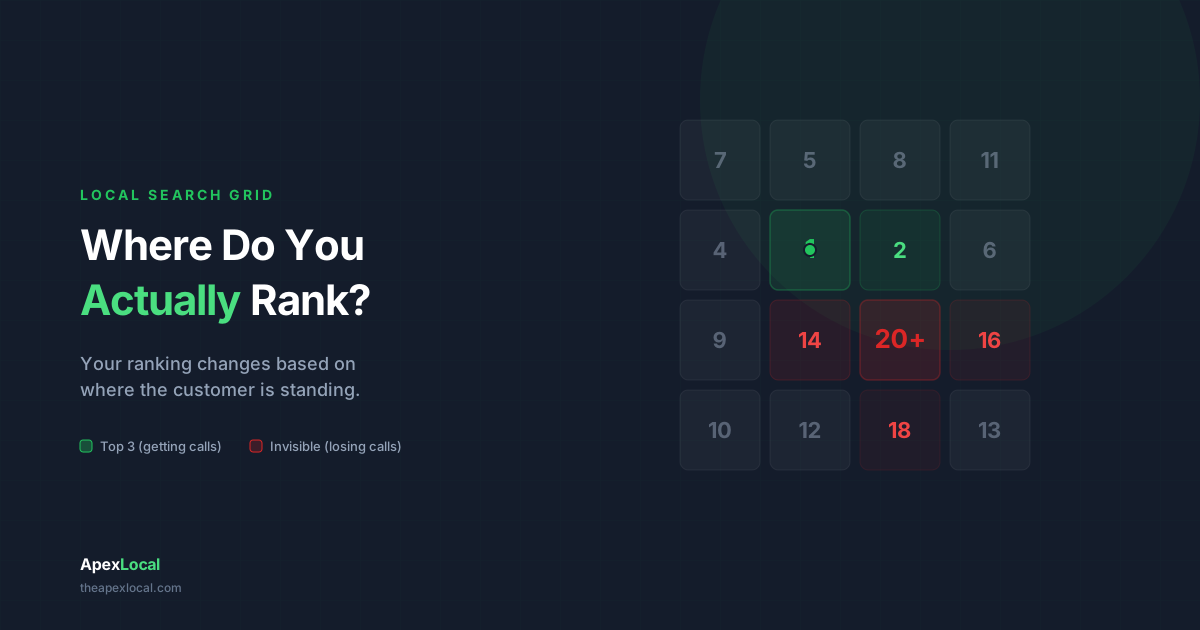
The mistake most Houston home service business owners make is assuming ranking is static. It's not. It shifts every week based on who's generating reviews, who's updating their profile, and who's getting more engagement.
Your competitor isn't outranking you because they're better at what they do. They're outranking you because they have a better system for managing the signals Google uses to decide who shows up first. Review count, recency, profile completeness, NAP consistency, and click signals — fix those, and the ranking follows.
Want to see where your business actually stands? We'll run two free reports showing your exact ranking position, competitor threats, and visibility gaps across your service area. Request your free audit →
Apex Local automates review collection, responds with AI, and monitors 70+ platforms — all on autopilot.
Get Early Access →No credit card required.