4 min read
A salon in Austin has 11 Google reviews. The salon two blocks away has 94. Both are accepting new clients. Both have 4.8 stars. One gets the call. The other gets scrolled past.
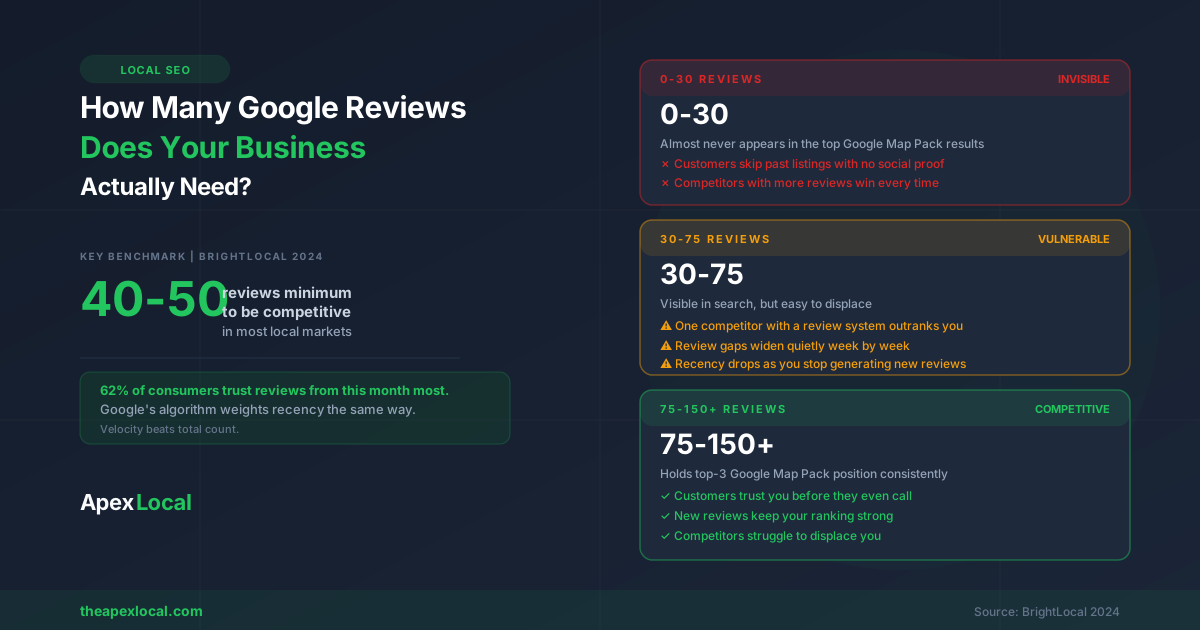
How many Google reviews does a small business need to rank and get chosen? The answer is higher than most business owners expect, and it keeps rising every year.
Most small businesses need at least 40-50 reviews to be competitive in local search. To hold a top-3 position in the Google Map Pack, you typically need 75-150+ reviews, depending on your industry and how competitive your city is.
According to BrightLocal's 2024 Local Consumer Review Survey, 43% of consumers say they need to see at least 20 reviews before trusting a local business. That's the floor for basic credibility. Not a competitive number. The businesses actually ranking and getting called tend to average two to four times that.
Most local businesses cluster between 4.2 and 4.9 stars. That range is too tight for star rating to do much separating.
A dental practice with 4.8 stars and 18 reviews will lose to a competitor with 4.7 stars and 120 reviews almost every time. Not because customers consciously pick based on count, though many do. Google's local ranking algorithm uses review volume and recency as key signals for how prominently to display your listing. A higher count, all else equal, earns a higher position.
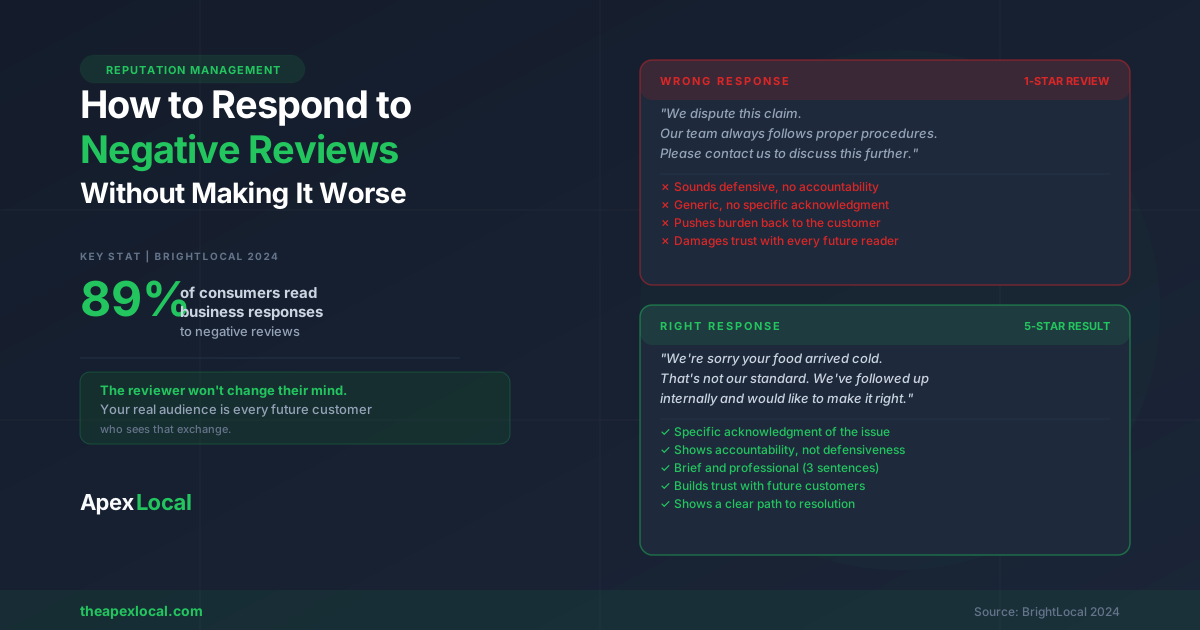
This is also why responding to every review matters — engagement signals show Google and potential customers that your business is active and accountable, not idle.
Your competitors set the bar, not a universal rule. Here's a realistic benchmark across common industries in mid-size markets:
| Industry | Minimum to Appear Credible | Top-3 Map Pack Target | |---|---|---| | Restaurants | 50+ | 100–300+ | | Dental Practices | 40+ | 75–200 | | HVAC / Plumbing | 50+ | 80–200 | | Auto Repair | 40+ | 80–150 | | Salons & Spas | 30+ | 60–150 | | Law Firms | 20+ | 40–100 | | Medical Practices | 30+ | 60–150 | | Pest Control | 40+ | 75–150 |
Major metros like New York, Miami, or Los Angeles will require higher numbers. Small towns may require fewer. And these figures rise every year as more businesses treat reputation management as a priority.
Here's the part most business owners miss: it's not just how many reviews you have. It's how recently they arrived.
BrightLocal's research found that 62% of consumers say reviews from the last month are most relevant to them. Google's ranking algorithm reflects the same logic. A business with 80 reviews that collected 30 of them in the last 90 days will typically outrank a business with 100 total reviews that hasn't gotten a new one in six months.
A steady stream of new reviews signals something specific: this business is actively serving customers right now, and they're satisfied. A static review count tells a different story, even if the star rating looks fine.
This is why the top reasons businesses get outranked on Google Maps often comes down to one factor: the competitor winning has a system that keeps reviews coming in consistently. No system means no velocity.
Platforms like Apex Local handle review requests automatically after every job, appointment, or transaction, so the flow stays consistent without your team chasing each customer individually.
If you're at 35 reviews today and your closest competitor is at 90, and you both have similar customer volume but they're consistently collecting reviews and you're not, the gap doesn't hold. It widens.
The cost of ignoring your review profile shows up in your call volume before it shows up anywhere else. By the time fewer leads are coming in, a competitor may have doubled their review count and held the top-3 map position long enough that customers default to them out of habit.
Getting ahead now costs far less than catching up later.
Apex Local automates review collection, responds with AI, and monitors 70+ platforms — all on autopilot.
Get Early Access →No credit card required.