4 min read
Choosing the best review management software for restaurants isn't something most owners think about until a competitor with half the dining room starts showing up higher on Google Maps.
By then, the review gap is already wide. One restaurant has 200 Google reviews and a 4.8 average. Yours has 40 and a 4.6. Both serve good food. One gets the reservation. The other gets the "is this place still open?" question.
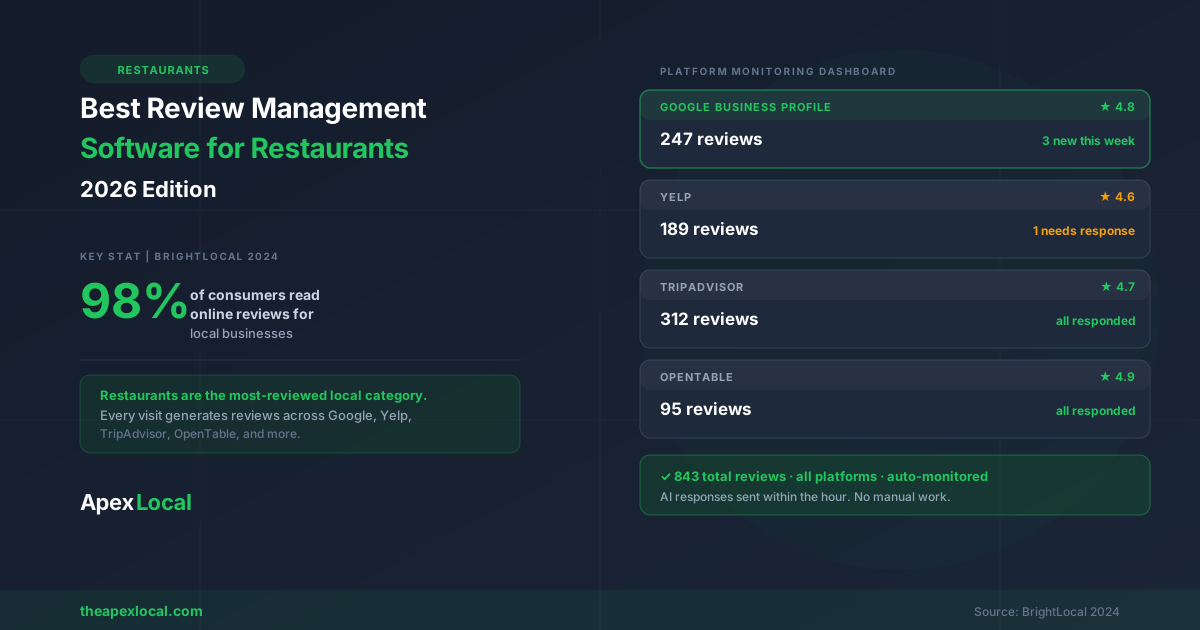
The best review management software for restaurants automates three things: requesting reviews from diners after each visit, monitoring reviews across every major platform, and responding to new reviews without anyone on your team spending time on it.
According to BrightLocal's 2024 Local Consumer Review Survey, 98% of consumers read online reviews for local businesses, and restaurants are the most-reviewed category in local search. That volume is both an opportunity and a vulnerability. With every visit generating a potential review on any of a dozen platforms, managing this manually doesn't scale.
Restaurants face a review challenge that's more intense than most industries for a few specific reasons.
Volume is higher. A busy restaurant serves hundreds of diners a week. That's hundreds of chances to earn a review, or lose one to a bad experience that never gets addressed.
The platforms multiply. Google Business Profile is essential, but Yelp and TripAdvisor carry specific weight for diners in a way they don't for plumbers. OpenTable and Resy surface reviews directly in the booking flow. Grubhub and DoorDash collect delivery reviews separately. Most restaurants are being reviewed across 8-12 active platforms and monitoring none of them consistently.
Diners decide fast. Unlike hiring a contractor, choosing a restaurant happens in minutes. A search on a Friday night, five listings compared, a quick scroll through photos and recent reviews. You either show up well in that moment or you don't get the table.
Negative reviews spread faster. The cost of ignoring your review profile isn't just losing a single customer. In restaurants, one bad experience that goes unanswered can become a visible public record that shapes every future diner's decision before they've even seen the menu.
Not every review tool is built for the restaurant context. Here's what actually matters:
| Feature | Why It Matters for Restaurants |
|---|---|
| Automated review requests via SMS/email | Diners don't return unprompted. Timing an ask right after the visit captures the moment. |
| Multi-platform monitoring | Google, Yelp, TripAdvisor, Facebook, and OpenTable all need watching. |
| AI-generated responses | Volume and speed requirements make manual responses impractical for busy restaurants. |
| Response time alerts | Unanswered reviews older than 24 hours signal neglect to potential diners. |
| Analytics by location | Multi-location groups need location-level data, not just aggregate numbers. |
When a diner leaves a 2-star review about a slow kitchen on a Saturday night, the clock starts. Every future customer who searches your restaurant over the next 48 hours sees that review before you've said a word.
Most restaurants fall into the same trap: a 1-star review about cold food sits there for two weeks with no response while the manager deals with everything else. Future diners read that silence as indifference.
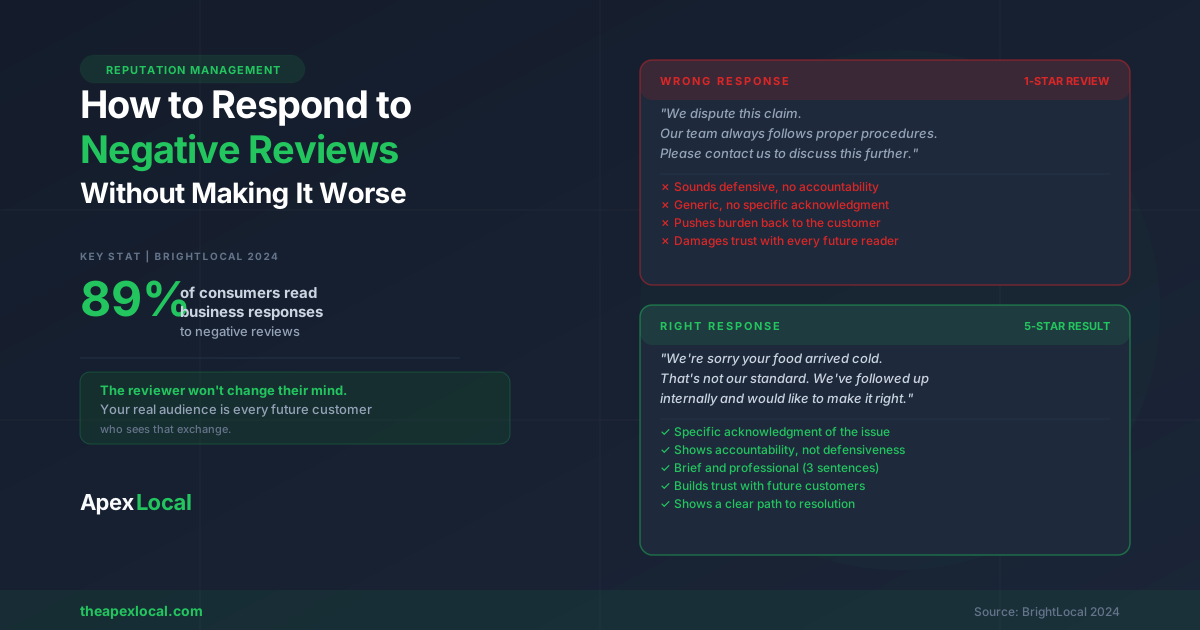
Responding to negative reviews correctly isn't just damage control. BrightLocal data shows 89% of consumers read business responses to reviews. In restaurants specifically, where the experience is personal and emotional, a fast and genuine response signals to future diners that you care about what happens in your dining room.
The problem is staffing. Restaurant owners and managers are running kitchens, supervising servers, and dealing with suppliers. Nobody on the team is sitting at a computer ready to respond to Yelp reviews at 11pm on a Friday. So those reviews don't get responded to, and the next morning, the damage is already visible.
That's the gap that review management software closes. The platform monitors every review across every channel and generates a response for your approval, or posts automatically, so timing is right even when your team is in the weeds.
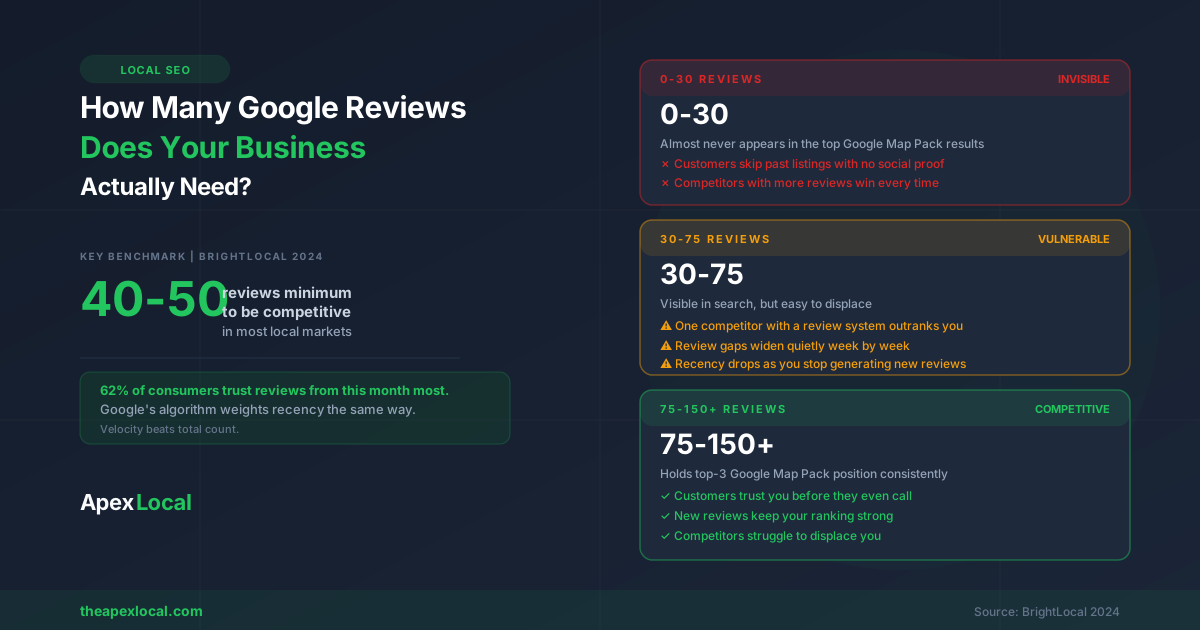
Most restaurants need at least 100-300 reviews to hold a competitive position in the Google Map Pack, more than most other local business types because the category is so heavily reviewed.
In a mid-size city, the top-3 results for "best pizza near me" will typically average 200+ reviews and 4.7+ stars. In major metros, that number climbs to 500+. This isn't a bar you cross once. It keeps rising as competitors keep asking.
Review velocity matters just as much as total count. A restaurant with 200 total reviews that hasn't gotten a new one in 90 days will often rank below one with 120 total reviews that gets 10 new ones per week. Google weights recency. Diners do too. Recent reviews signal that the experience described is what they can actually expect tonight.
If your restaurant is collecting 2-3 reviews per month naturally and a competitor has automated review requests bringing in 10-15 per month, the gap compounds. Six months from now, they have 100 more reviews than you and a stronger position in every relevant local search.
See how a tool like Apex Local automates the review request process so velocity stays consistent without your staff remembering to ask every single table.
Apex Local automates review collection, responds with AI, and monitors 70+ platforms — all on autopilot.
Get Early Access →No credit card required.